|
|
|
Asociación Española de Fisioterapia en Salud Mental, AEF-SM Una especialidad de la Fisioterapia |
|
|||||||||||||||||||||||||||||||||
|
|
|
Inicio Conócenos Foro Documentos Miembros Contacto |
|
|||||||||||||||||||||||||||||||||
|
|
|
Master
in Mental Health Physiotherapy Basic
Body Awareness Methodology An International clinical
post-graduate study program of Physiotherapy in Mental Health 60 ECTS, University of Almeria (UAL),
Spain Applications for the 5th edition (January-December 2026)
are welcome from 1st May 2025 (apply here) Watch the 2
minutes BBAM video Please note that this edition will follow a hybrid model including
online sessions and 1 study visit to the Almeria University Campus (5
consecutive days expected in June) During 2025, you
can still attend the introductory online session that is organised by Prof.
Dr. Liv Helvik Skjaerven. You can contact her at liv.skjaerven@gmail.com The 4th edition of BBAM at University of Almeria was successfully
completed in December 2024 with a new international group of students
graduated! Congratulations to you all!
The program was prepared during 1980-90ties through
courses within the Norwegian Association of Physiotherapy, Subsection of
Physiotherapy in Mental Health. In line with the professional development,
the rise of research and Evidence-Based Practice (EBP), there was a need to
develop the courses into a university study program. Accordingly, Basic Body
Awareness Methodology (BBAM), started as an international university
post-graduate study at Western Norway University of Applied Sciences (HVL),
Bergen, Norway in 2003. Since then, the program has been revised every second
year. The curriculum provides didactic, skill acquisition, accomplishing
clinical projects with updated leaning outcome and references. BBAM was primarily designed as a
two-year international, part-time study program (60 ECTS) based on a
governmental initiated request for internationalization. From 2003 to 2017,
the program has been lead by Prof. Liv Helvik Skjaerven, completing 7 editions,
including more than 100 students from several continents: Japan, Australia,
Hong Kong, Brazil, Mexico, Canada, Turkey, Austria, Spain, Netherlands,
Germany, UK, Estonia, Faro Islands, Sweden, Finland, Iceland, Denmark and
Norway. The BBAM education has gained a high international reputation and
received a good recognition and support by many national physiotherapy
associations and universities around the Globe.
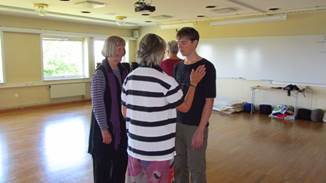
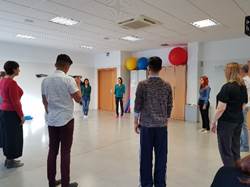
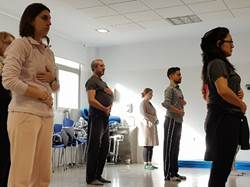
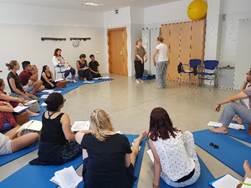
Photo: Group of BBAM students graduated in 2017
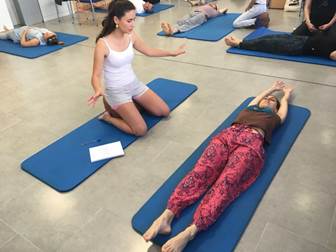
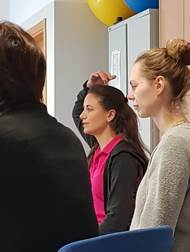
Photo: Group of BBAM students graduated in 2015 Photos: Lectures held
in Bergen University College at the postgraduate education Basic Body
Awareness Methodology
Since 2018, BBAM education headquarters moved from
Norway to Spain and lecturers from several countries participates in the
teaching to ensure internalization of content and exchange of competences
between universities – this is rewarding for both staff and students. The
University of Almeria is hosting the ‘Master of Physiotherapy in BBAM’
providing a 60 ECTS program adapted to the international physiotherapy
community following the World Physiotherapy guidelines on education (http://www.wcpt.org/policy/ps-education). The University of Almeria (in Spanish: Universidad
de Almeria, UAL) is a public university situated in Almeria, on the south
coast of Spain. The University Campus is located on the shore of the
Mediterranean Sea, and it offers 38 different degree programmes, with 1.150
lecturers, and 12.000 students. More information can be found at http://cms.ual.es/UAL/en/
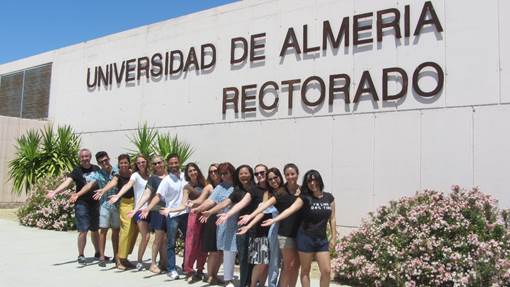
Photo: Campus of University of Almeria Photo:
Faculty of Health Sciences
Photo: University of Almeria Paraninfo
Long-lasting
musculoskeletal disorders and mental health problems are current leading
causes of disability (Hagberg, 2012). Physiotherapists have a central role in
the treatment of these disorders (World Physiotherapy, 2018). To obtain a
positive treatment outcome, it is important for the physiotherapists to
understand how life experiences and diseases can foster lack of contact with
the body, expressed in human movement and function (Laisnè, 2011). The Master of PT in BBAM
builds on three important educational and therapeutic principles from the
view of human movement, promoting movement quality through movement awareness
learning: it is 1) person-centered, 2) process-oriented and 3) health-directed.
BBAM methodology builds on principles of Basic Body Awareness Therapy (BBAT),
the physiotherapeutic approach, officially accepted in Norway since the
1980-ties. The program qualifies the physiotherapist in the body and movement
awareness learning program, re-establishing contact with the body and the
movement quality, movement habits and ways of being, enhancing personal
insight and coping strategies for implementation in every-day life. 3.1.
Conceptual element
of BBAM - Human movement is more than
physical exercise The conceptual elements of BBAM are weaving a
multi-perspective view on human movement into teaching and learning. Thus,
anatomical, physiological, psychological, social, cultural and existential
components are integrated to strengthen the person`s self-identity through
movement. The curriculum embraces 1) BBAT Theory, included research
methodology and methods, 2) Personal-training (self-experience) in
BBAT-movement, awareness learning and movement quality principles, 3)
Clinical implementation of BBAT in individual and group therapeutic settings,
4) Communication to patients, health team, society and in the clinical master
thesis. BBAM is developed from the clinical hypothesis of
the three-fold contact problem: the person’s lack of contact with the
physical body, inner life, external environment and the relation to other
persons` and the consequence for human movement, wellbeing and health (Dropsy
1973). Becoming aware means to direct attention and
mentally contact the body and own movements, identifying nuances of movement
quality, monitoring internal sensations and external environment, providing
sensitivity to experiences (Skjærven et al 2019)). The specific movement
pedagogy includes elements directed towards the therapist acquiring a
personal know-how in the BBAT-movements, embodying a span of movement
elements and aspects, through presence in and awareness of movement
potentials. This provides the physiotherapist with insight and understanding
basic to treating others. BBAM includes BBAT-movements, situations and
projects designed to involve the student during learning, providing a
know-how. The program includes movement co-ordinations as an extract from
everyday life, lying, sitting, standing, walking, relational movements, use
of the voice and massage (touch). The movements are simple, small and soft,
intended to foster functional movement quality, learning new movement
strategies. The physiotherapist learns to acts as a guide, bridging therapy
situations with the persons` everyday life and needs. 3.2.
An eye for movement quality and health BBAT, the therapeutic approach and BBAM (education)
is known for its focus on movement quality, “how the movements are performed
in relation to space, time and energy”, the quality in the movement patterns
and personal experiences. Postural stability, free breathing and mental
awareness are key elements, when integrated into movements, aiming to promote
more functional movement quality, and sense of wellbeing and health. When
integrating movement aspects into daily movements, a set of therapeutic
factors, including the Movement Awareness Learning Cycle, provides the
learner with steps to follow through four clinical models, including conceptualization
and reflection on experiences. This fosters meaning and insight in coping
strategies closely related to life situations (Skjærven et al 2008, 2010,
2019). 3.3.
Its contribution in
physiotherapy The Clinical Master of BBAM, the one year study, is
qualifying the physiotherapist with a specific clinical competence in BBAT,
presented by qualified teachers in BBAT, from several countries in Europe,
Asia and South-America. The academic study program of PT in BBAM has been
arena for many clinical research projects, and thus a base of further
professionalization of the body- and movement awareness domain in
physiotherapy. Within the field of BBAT, research has demonstrated
that persons suffering from anxiety, depression and post-traumatic diseases
have benefitted from implementing BBAT principles. Research has shown that
participants become more aware of their own daily movements and functions, as
a mean to be used in life, attuning inner sensations and emotions as well as
interrelation to other people and actions. Pioneering research in this field
has developed since the first PhD in 1985 by G Roxendal, Sweden, however, indepth
research is needed. 3.4.
Needs in society –
Needs in Physiotherapy BBAM is
attracting international interest. Obviously, there is a need for
physiotherapy qualification to meet the documented increase of people
suffering from long-lasting multi-perspective musculoskeletal and mental
health problems. BBAM, the study program, as well as BBAT, the physiotherapy
approach, involves the students and patients, providing practical skills and
insight for professional and/or personal use. Its movement principles and
therapeutic strategies, terminology and ethical values, are reported from
BBAM-students to be innovative and clinical important. To implement movement
awareness learning strategies in patients daily life, the therapist need to
be conscious of the fact that increased awareness may, in some, be associated
with a tendency to become too preoccupied with bodily signals and sensations,
intensifying them and interpreting them as symptoms (Hansell, Sherman and
Mechanic, 1991; Mehling et al., 2012). Accordingly, the physiotherapist needs
to be qualified in handling a diversity of clinical situations, including
patients` psychological reactions. The
goal, in BBAM, is to provide an educational program for physiotherapists
interested in mental health and in need of concrete professional skills,
treating persons suffering from long-lasting muscle-skeletal and mental
health problems, psychiatric disorders and psychosomatic problems. The goal
of the Clinical Master of PT in BBAM,
is to strengthen the physiotherapists’ qualification and role as therapist
from a health directed and professional point of view. As
academic and clinical educators, we are advocates of an evidence-based
practice, with high professional standard. Increased scientific training in
physiotherapy is emphasizing logic and sound methods. Physiotherapy degree
program prepare students for meeting patients in lack of contact with own
body and feelings expressed in their movements, integrating multi-perspective
components in physiotherapy. Combining skills, learning to promote movement
quality through the BBAT-movement awareness learning-program together with
objective tools of scientific methods and EBP, is not just an educational
strategy. It aims to prepare physiotherapists in solving clinical problems
within mental health physiotherapy – it adds meaning, it involves and motivates the student as well
as the patient.
Photos: Photos of the International Association of
Teachers in Basic Body Awareness Therapy www.iatbbat.org
Study method The
study program of the Master Thesis is adapted, geographical, to reach out
world-wide and consequently, in the 2026 edition, includes an online, digital
education, from January to December, arranged with alternating Blocks (5),
obligatory, and Seminars (5), strongly recommended, study periods with a
variety in practical learning. In addition, comes one obligatory week (5
days, Monday-Friday), in June, at the UAL Campus, Spain, focusing on clinical
practice, communication and self-experience in BBAT. In
general, the program is designed to give students flexibility, with the
shifting blocks and seminars, together with the personal meeting in June, at
UAL, providing a format suited for effective educational,
therapeutic-directed learning. The
study progress, arranged as the 5 online blocks, each of one week of 20hrs
teaching, intertwined with the 5 online seminars, all presents theory,
clinical implementations and self-experience. The study program before and
after the blocks and seminars, includes a period of self-study with students
organized, in BBAM-study-groups followed by continuous written assignments,
clinical practice, self-experience in BBAT. The
intensive online-study, during the blocks and seminars, is designed to serve
those in various parts of the World who are entrenched in their current jobs
and without the ability to relocate to Spain for one year. This is also
because students shall start implementing BBAT in clinical practice, what
they learn immediately following a close-to-practice learning process and
clinical implementation. Preparatory and follow-up online courses take place
before and after the intensive BBAM blocks and seminars. It is
obligatory for the students to follow all Blocks, however, the Seminars are
“strongly recommended”. In order to complete the study requirement, and due
to the “flow” in the learning, we encourage to follow the study progress, as
the alternating blocks and seminars builds on each other. The
study program is designed on educational principles of personal experience
and professional integration of BBAM methodology and principles making the
student work interactive. This is achieved through a variety of pedagogical
methods constantly changing between theory, clinical studies, personal
self-training, group work, study of filmed material in booklets and recorded
films from Blocks/Seminars, written assignments, seminars, lectures and
projects. Intensive "floor work", role-play and case studies covers
areas of the curriculum. In the
period of self-study, the students collaborate online using the Learning
Management Systems at UAL at home, individual and organized in BBAM-study
groups. The work-demand for the student is to send monthly assignments,
planned by the teacher, to UAL for evaluation and feedback by
teacher/supervisor. The
student must have access to computer and basic computer skills to work
online, as well as access to arrange online teaching/learning in line with
UAL requirements. The study language in all parts of the study is English. 4.2.
Program length The
work-load in the study program is estimated to one academic year, January
till mid-December. The curriculum (60 ECTS) includes three (3) modules: 1)
Health, physiotherapy and society, 2) Basic Body Awareness Methodology, and
3) Evidence-based clinical practice in BBAT and qualitative research. The
study year is organized in monthly-meetings, including five Blocks, each of
20 hrs, intertwined with five Seminars, each of 8-12hrs. The study year ends
with completing the clinical master thesis, together with two final
oral/practical exams in BBAM, followed by an oral defense of the master
thesis. The
student is responsible for organizing the periods of self-study in between
the blocks and seminars, in line with recommendations. The period of
self-study includes: (i) study of BBAT theory, (ii) BBAT clinical practice,
(iii) personal training in BBAT movement and (iv) Communication through
written assignments and clinical project. 4.3.
Clinical practice Clinical
practice means to implement BBAM methodology, evaluation tool and BBAT
movement principles, in a person-centred, process-oriented and
health-directed physiotherapy. During blocks and seminars the students are
supervised in the Body Awareness Rating Scale-Movement Quality and Experience
(BARS-MQE), in BBAT movement practice, floor work, in Body Awareness
Scale-Interview (BAS-I) and Motivational Analysis (MA), presented by
university lecturers and clinician, all to be implemented in clinical
practice. 1: The
student is responsible to present a clinical placement (workplace), to UAL,
before 15th of December 2025. This is to be accepted by UAL/teacher/clinical
supervisor. If needed, the student will get support in order to find a
clinical workplace. 2: The
student is responsible to start clinical practice, from 1st of February,
lasting till 10th of November 2026, one day (4hrs) pr. week, through (about)
30 weeks, in total 150hrs (75hrs spring, 75hrs fall). Use log/diary during
the year as basic for documentation of clinical practice. Practice can be (i)
clinical PT, (ii) health promotion or (iii preventive health care. BBAM 1
includes implementation of individual BBAT, BARS-MQE, later in the period
also Body Awareness Scale-Interview (BAS-I) and Motivational Analysis (MA).
The student arrange for situations to “follow” patients/ clients over shorter
and longer periods. For
BBAM 2 the student is responsible to plan for including also group BBAT,
starting mid-June. In Group BBAT the student starts with a small BBAT group
(+- 4 patients). Later / September the student arranging for a larger BBAT
group (6-8 patients), both over a period of 4-6 weeks, each of 60 minutes,
once a week. 3: Clinical Supervision in BBAT: UAL provides
the student with 1 1/2hrs clinical supervision pr semester: 1 1/2hrs during
spring and 1 1/2hrs during fall, by a qualified BBAT teacher. 4: All
clinical practice, individual/group BBAT, BARS-MQE, BAS-I and MA, is to be
documented by student and accepted by clinical supervisor, first clinical
practice documentation is 31h of May (BBAM 1) and second (main/including all
practice) BBAM 2 documentation by 10th of November 2026, both presented
through a listed overview. 5:
Self/personal-training: The student is responsible to arrange for weekly
(ongoing) self-training in the BBAT movements, during the study-year, +-
3-4hrs pr week, January to November, in total 150 hours, 75hrs spring and 75
hrs fall 2026. This is to be documented by student and accepted by clinical
supervisor, first documentation of self-training is before 31st of May (BBAM
1) and second is by 10th of November 2026. The student: use a log/ taking
notes, describing educational progress, both presented through a listed
/summed overview. 6:
Summing up: the student is responsible to send to clinical
supervisor/teacher, (i) a
listed overview of clinical practice for two periods: (A) 31st of May (B) 10th of November, (ii)
listed overview of self-training BBAT-movements for similar two periods. Both
lists have to be accepted and signed by the supervisor/program-coordinator in
order to gain clinical competense. For all
clinical practice in own (home-land) country, the student is responsible (i)
to be updated on, (ii) to arrange for and (iii) to follow national
physiotherapy regulations. 7:
General Supervision during study year: The students receive supervision on
clinical implementation of BBAT, its methodology, during Blocks and Seminar,
through written assignments, and clinical presentations. Supervision is
provided during skill training, personal training, movement guidance and case
presentations. In the periods of self-studies, the students are organized in
BBAM-study-groups and peer-learning groups across continents. 8:
Clinical supervision on psychological aspects arranged by students
him/herself: The student is responsible for arranging, receive and document
clinical supervision on psychological aspects based on own clinical practice,
1 1/2 hours, in each of the two terms, BBAM 1 and BBAM 2, in total 3hrs
during the whole study-period. The supervision is directed towards
psychological aspects in students own BBAT practice. Such supervision can be
provided by an authorized Psychiatrist, Clinical Psychologist, Psychotherapist
or Physiotherapist specialized in Psychiatry and/or Mental Health/clinical
supervisor. The supervision is presented to and accepted by UAL, by 10th of
November 2026. The student him/herself is responsible for such an arrangement
and cost.
4.4.
Program and lecturers The
Master of Physiotherapy in BBAM is awarded to students who successfully
fulfill the requirements of the following courses. The
required courses (ECTS Credits) are organized as follows in three modules: Each
course will have a main lecturer and when needed, there will be guest
lecturers in some of the courses. Module 1) Health, physiotherapy and society (15
ECTS) a) Introduction to Physiotherapy in Mental Health (3
ECTS) b) Health, salutogenesis and society (3 ECTS) c) Mental health and psychiatric diseases (3 ECTS) d) Movement science function and interrelationship (3
ECTS) e) Movement interventions in mental health (3 ECTS) Module 2) Basic Body Awareness Methodology (30 ECTS) a) BBAM 1 – Evaluation tools and individual therapy (12
ECTS) b) Communication of BBAM principles (6 ECTS) c) BBAM 2 – Therapeutic factors and group therapy (12
ECTS) Module 3) Evidence-based clinical practice and
research (15 ECTS) a) Research methodology (3 ECTS) b) Clinical practice (6 ECTS) c) Master Thesis (6 ECTS) Lecturers:
Besides
de above, guest experts in Basic Body Awareness Therapy from other countries
will participate in the teaching. 4.5.
Important dates New groups start every 2nd year since
2018. It means that there will be a new group starting in 2026, 2028, 2030,
etc.
Upon completion of the study program, students will
gain Clinical Competence in BBAT to become “BBAT Physiotherapists”. This
course is part of a formal education in BBAT recognized by The International
Association of Teachers in Basic Body Awareness Therapy – IATBBAT www.iatbbat.org 4.6.
Entry requirement Applicants
must have obtained a Bachelor's degree in Physiotherapy. English oral and
written skills are required. UAL organizes an individual interview with each
applicant before being accepted for the Clinical Master. 4.7.
Learning outcomes After
completion of the study program, the student will have acquired the following
learning outcomes, defined as knowledge, skills and general competence: Knowledge
Skills
General
competence
4.8.
Mandatory attendance requirement Full
attendance in the online blocks at UAL (100%) is mandatory; attendance in the
5 seminars is strongly recommended: the working methods in the program are
based on floor-work with movement sessions, theory, group work, reflections
and discussion, drawing on the professional experience and academic
qualifications of the students. Without students' attendance, as above
described, the learning outcome of the programme is not achieved. The Blocks
and Seminars are recorded, for the students to study, in between the
blocks/seminars. It is expected that the students update themselves. All
presented material and floorwork, in blocks and seminars are obligatory and
are basic to gain clinical competence in BBAT, In
cases where non-attendance is beyond the student’s control, for example
documented illness, non-attendance up to 20% might be considered tolerated
under special circumstances will be compensated by additional assignments as
agreed with the program lecturers. 4.9.
Internationalization BBAM is
for physiotherapists, internationally. BBAM is taught by lecturers from
countries such as Norway, Sweden, Denmark, Finland, Estonia, Faro Island,
Japan and Spain. There is a good mixture of academics and clinical
practitioners. The leading international academics and researchers in
Physiotherapy in Mental Health are teaching at BBAM. 4.10.
Assessment, exams, and course work requirements The
student is continually evaluated according to theory, practical/oral skills,
personal BBAT movement skills and professional development during the online
blocks and through the obligatory written assignments during the self-study
periods. Film might be used for evaluation of practical/ clinical skills. The
student is evaluated through each course, at the end of each course,
containing a variety of assessments such as debates in online classrooms,
assignments, questionnaires, practical/oral exam, etc. In general, courses
will be evaluated by different ways such as using a portfolio, reports on
self-experience and self-training, clinical projects, assignments, films on
guiding, project presentations and exams. The
Master thesis will focus on the clinical implementation of BARS-MQE and BBAT.
Only limited, clinical BBAT projects, implementing BBAT, BARS-MQE, BAS-I and
MA will be accepted; BBAT and BARS-MQE is obligatory to be clinical used,
presented and reflected on. During Master
of PT in BBAM 2026 a variety of exam forms is implemented, related the
shorter courses different from the exams in BBAM 1, BBAM 2, and the Master
Thesis subject. Final
oral exam take place in Block 5, and consists of three oral/practical exams
and stretches during three days, one exam pr day for all students: (1) Oral
presentation of BBAM theory, 2) Oral / practical presentation of promoting
movement quality through movement awareness in BBAT – movements and 3)
Defense of the Master-thesis. The total time for the three oral exama pr.
student is max 1 hrs (60min). The final exam is a synthesization of the study
year. To gain
clinical competence in BBAT, the student is to have “passed”, all exams in
the Clinical Master of PT in BBAM, 2026. 4.11.
Obligatory literature BBAM
has 1700 pages of obligatory literature given by UAL. In addition comes 300
additional pages of references related to the courses in master thesis
program, 1 (100p) and term 2 (200p),
chosen by the candidate and accepted by UAL. Obligatory
BOOKLETS for clinical implementation of BBAT and BARS-MQE: available before
start: ·
Basic
Body Awareness Therapy. Promoting Movement Quality and Health for Daily Life.
Documentary and Tutorial Films for clinical practice + Part 2 clinical
implementation with 54 photos as guide for practice. LH Skjaerven; 2013/2021. ·
MANUAL.
Body Awareness Rating Scale – Movement Quality and Experience. An Evaluation
tool of Movement Quality in the Movement Awareness Domain in Physiotherapy.
By LH Skjaerven. 2016/2021; 70 pages.
The
total tuition fee for the Master’s program (60 ECTS) is 2,850 €. As the
University limits the number of students admitted, applications are processed
on a first-come, first-served basis. To secure a place, applicants must pay a
deposit of 350 € during the application process. The remaining balance of
2,500 € must be paid 2–3 months before the start of the program, once the
University opens the registration system. Once all places are filled, a
waiting list will be established. For any question you are welcome to
write to one of the team members dcatalan@ual.es
The city of Almeria has an international airport
with the following destinations: ·
Madrid
(Iberia) ·
Barcelona
(Vueling airlines) ·
Brussels
– Charleroi (Ryanair) ·
London
– Gatwick (Easyjet) ·
London
– Stansted (Ryanair) Besides of the above, there are other international
airports close to Almeria: ·
Malaga
(approx. 2,5 - 3 hours by direct bus) ·
Granada
(2,5 hours by direct train) ·
Alicante
(from the airport of Alicante, approximately 3.5 hours by direct bus) ·
Madrid
(bus and train around 6-7 hours, or flights at 1 hour) The University of Almeria has a University
accommodation building with the following prices: http://www.residenciacivitas.com/en/temporary-stay-almeria/ Besides the University accommodation, students can
also contact locals to rent a room or a full apartment: Idealista: https://www.idealista.com/alquiler-habitacion/almeria-almeria/ Related
links: Informative poster BBAM 2015-17
Copyright © 2025 fisioterapiasm.es Todos los derechos reservados. |
|
|||||||||||||||||||||||||||||||||
|
|
|
|
|
|||||||||||||||||||||||||||||||||